Composting Microbiome Lab 🐪
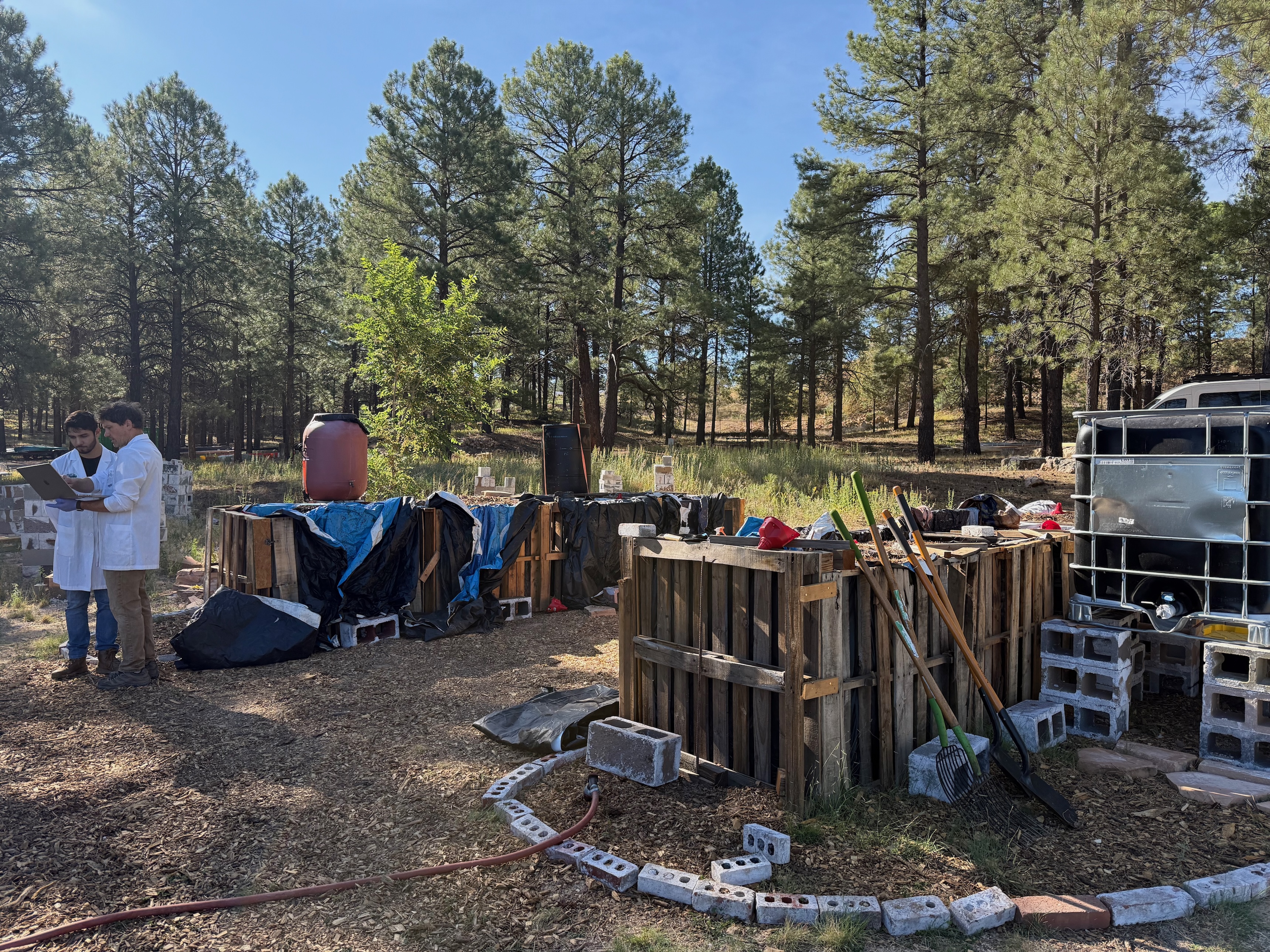
The Composting Microbiome Lab (CML) is tackling one of humanity’s oldest and most reliably produced resources; human excrement. Yes, poop! The very word triggers disgust (and giggles), yet this universally produced “waste” sits at the center of one of the most urgent and exciting frontiers in microbial science. Historically, human excrement was regarded as a vital agricultural resource, generating economic markets around its collection and trade but over the past 200 years it has become increasingly undervalued in modern waste systems.
We face a staggering global sanitation crisis, shaped by centuries of historical, economic, and political factors. As of 2024, 2.2 billion people lacked safely managed drinking water, 3.4 billion lacked safely managed sanitation, and 1.7 billion lacked basic hygiene services at home. These statistics represent a systemic failure to recognize human excrement for what it truly is: a nutrient-dense resource with enormous untapped potential for soil restoration, agriculture, and closing the nutrient loop.
At the CML, we are flipping the script. Using QIIME 2 and next-generation sequencing and multi-omics approaches, we are diving deep into the microbial communities driving human excrement compost (HEC), identifying which microbes are present, which are metabolically active, and what novel enzymes they are producing. This biodiscovery work is laying the scientific foundation for faster, safer, and more reliable composting systems.
Our goal: transform human waste into nutrient-dense soil amendments that restore degraded soils, address public health crises, support global food security, and help build the bioregenerative life support systems that will one day carry humanity to other worlds.
Check out our Videos and Interviews
Meilander discusses this project and introduces some of our humanure heros at Rich Earth Summit.
Check out our Related Publications